


APRIL 2022
Sometime past midnight, after losing my wallet an hour from home, I am rescued by an autonomous vehicle named Moonwalk. The night is very quiet and dark, and then an innocuous orange-doored white car caged in rooftop sensors casts its lightbeams down the street. It drives up alone, halting expectantly to pick me up at the highest point of Potrero Hill. As we turn onto the east-edge and drive almost vertically down three consecutive hairpin turns on a winding road, I become acutely aware of the absence of street lights, and of being completely alone. The wheel turns and keeps on turning, under the weight of an invisible hand, with a chillingly sharp assurance.
I’ve been beta-testing these Cruise vehicles for about a month now - and since they’ve recently expanded the service area, it’s becoming my main mode of transportation. Earlier, it would mostly be me and M driving down to Ocean Beach at 1am, because that’s the only place it would go. She’s working on a product that enables any car to self-drive - but these are the first autonomous vehicles publicly available, so the novelty is real.
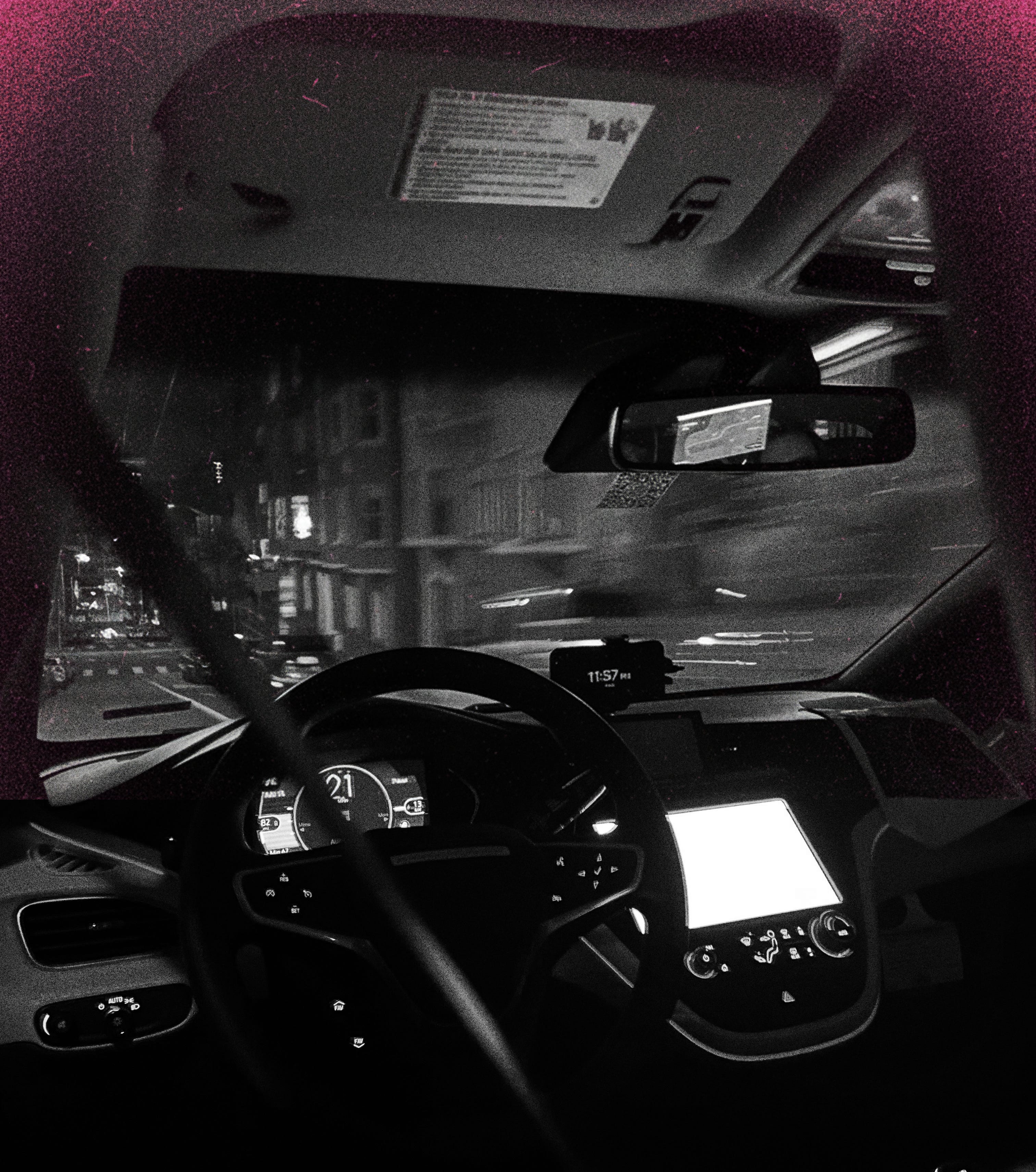
I’d always thought the interior of an autonomous vehicle didn’t need to really look like a regular car - especially the interior. It’s almost disappointing to step into the same configuration of nondescript leather seats, nothing out of the ordinary - just a plastic barrier and a couple of iPads, and subtle indicators of cameras recording you all the time. The exterior is intentionally friendly and cute and personified, cloaking what some might perceive to be dangerous technology. Because it looks somewhat the same as what we’ve always known, it’s safer to step in.
Perhaps when you’re introducing something unfamiliar to the world,
you need to lead with the familiar.
Inside a supersonic aircraft, there is no need for windows.
Not in any commercial aircraft really, it does nothing for the structural integrity. You sit inside a long tapering carbon-fiber tube, and soon arrive somewhere else, in the wake of a sonic boom every so often.
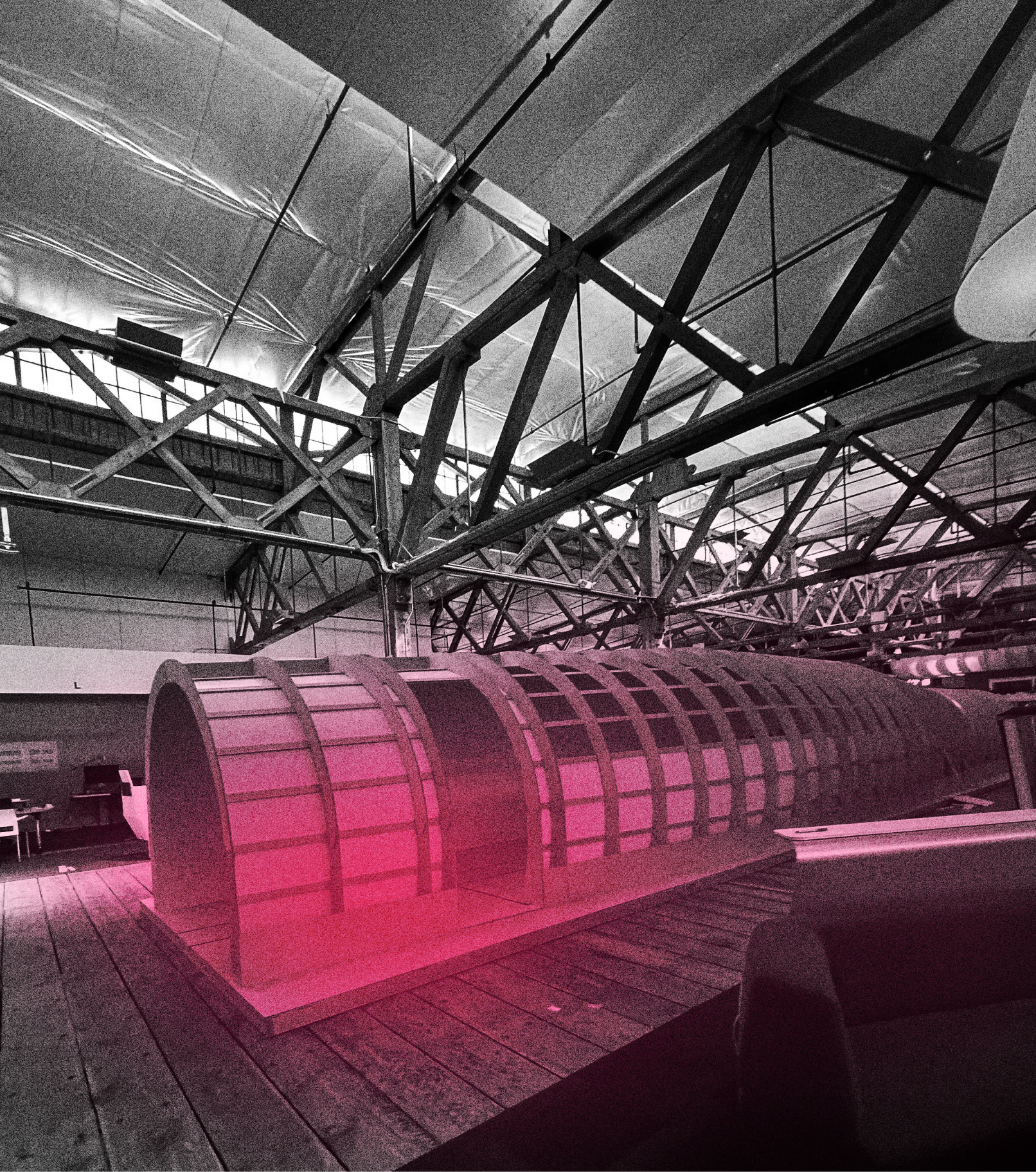
A prototype aircraft like a looming whale skeleton occupies almost the entire office on the pier, a centerpiece built to scale from wood and foam. Redesigning the passenger experience is an opportunity to throw out everything you know, creating a temporary psychological environment from scratch. With a blank canvas, we trial potential realities through movable foamcore cabin setups and chair configurations and light projections and VR headsets. At the end of the day, we start with what people want, so the first thing is to give them windows.